Frequently asked questions
Water quality and public health risk
New Zealand’s rivers, lakes and coastal waters are highly valued for a range of recreation activities that involve partial or total immersion in the water, such as swimming, surfing, sailing, or paddleboarding.
But the water at coastal beaches, and in lakes and rivers, can be contaminated with human or animal faeces (poo) due to pollution from stormwater and wastewater systems. Stormwater can contain faecal contamination from humans, but also wild (birds, possums) and domestic animals (dogs, sheep, cows).
The presence of faeces in recreational waters means that microbial pathogens that are harmful to humans may be present, such as viruses, bacteria and protozoa. These pathogens pose a health hazard to people who enter the water. They can cause gastroenteritis, respiratory illness, ear and skin infections, as well as more serious diseases, such as hepatitis A, giardiasis, cryptosporidiosis, campylobacteriosis and salmonellosis.
In general, there is a higher risk of faecal contamination:
- after rain, especially after heavy rain.
- in or near stormwater outlets and urban streams that flow onto beaches
- in older urban areas that have combined networks carrying both stormwater and wastewater, which are designed to overflow during heavy rainfall, and
- in areas serviced by onsite septic systems on the edges of cities or in rural areas where development has exceeded the capacity of those systems.
Find out more
Stormwater and the ‘first flush’: Andrew Chin, Head of Strategic Initiatives from Auckland Council’s Healthy Waters and Flood Resilience Department explains…
Avoiding stormwater outlets: Andrew Chin, Head of Strategic Initiatives from Auckland Council’s Healthy Waters and Flood Resilience Department explains…
The risk of illness from swimming is associated with levels of micro-organisms in the water, called Faecal Indicator Bacteria (FIB). Faecal indicator bacteria are bacteria that come from the gut of warm-blooded animals (including people). They indicate the presence of faeces (poo) and are associated with the presence of disease-causing pathogens. The two common bacteria that are measured are E. coli, in freshwater, and Enterococci, in seawater.
Guideline values for E.coli (freshwater) and Enterococci (seawater) are specified in the 2003 Microbiological Water Quality Guidelines for Marine and Freshwater Recreational Areas published by the Ministry for the Environment and Ministry of Health and have been selected to keep the risk of illness from swimming at less than 2%. A 2% risk of illness means that, on average, around 1 in 50 people would be likely to become ill after swimming. The swimming guideline is based on the risk of getting sick from being immersed in the water for 10 minutes and putting your head under the water three times.

Green pins are shown when Safeswim’s water quality models predict that levels of faecal indicator bacteria (FIB) at a location meet national guidelines for swimming. Where a green pin is showing, the risk of illness from swimming is estimated to be less than 2%. However, it is important to remember than a green pin means low risk, not no risk. Microbial pathogens may still be present and you may still get sick from swimming.
Some sites on Safeswim have permanent green pins. These are sites where there are no significant sources of faecal contamination and long-term sampling results indicate few (if any) exceedances of the swimming water quality guideline and consistently low FIB levels. Dynamic water quality modelling is not required at these sites.

Red pins are shown when Safeswim modelling predicts that the level of faecal indicator bacteria (FIB) at a location exceeds national guidelines for swimming. Where a red pin is showing, the risk of illness from swimming is estimated to be more than 2%. The actual risk of illness from swimming when a red pin is showing could be much higher than 2% because the concentration of FIB in the water could be much higher than the trigger threshold for a red pin.
A red pin may sometimes be used to indicate the presence of toxic algal blooms, such as cyanobacteria. While the risk of illness cannot be reliably estimated in these cases, swimming is not advised on a precautionary basis.

Long-term alerts are used at locations where water sampling shows that water quality consistently exceeds national guideline values for swimming and cannot be accurately modelled. Where a permanent red pin (long-term alert) is showing, the risk of illness from swimming is estimated to be more than 10%.

The black water quality pin on Safeswim indicates that the beach has been affected by a wastewater overflow. While the risk of illness cannot be reliably estimated, Auckland Council and Watercare strongly advise against swimming in locations where a black pin is showing as untreated wastewater is present.
There are two kinds of recreational water activity:
- Primary contact recreation, where you are in direct contact with the water with a high probability of being fully immersed and swallowing water. This includes swimming, surfing, water skiing, and diving.
- Secondary contact recreation, where you may have contact with water but there is a low probability of being fully immersed and swallowing water. This includes paddling, wading, boating, sailing, and fishing.
The information on Safeswim is based on the health risk of swimming and other primary contact recreation activities. The swimming guideline is based on the risk of getting sick from being immersed in the water for 10 minutes and putting your head under the water three times.
The health risk of secondary contact recreation activities which do not involve full immersion in water may be substantially less than swimming.
If you have become sick, especially within 3 days of swimming, you may have contracted a water borne illness. Symptoms could be respiratory, gastroenteritis and/or ear, eye and skin infections. If you have symptoms and are concerned, please visit your doctor or call Healthline for advice on 0800-611-116.
People who are immune compromised should follow the advice of their doctor before swimming.
If someone in the water is in trouble dial 111 and ask for the Police. Information on who to contact to report emergencies, pollution, or other issues is provided in the Contact section under About Safeswim.
It is recommended that you do not eat shellfish gathered from urban areas because of the risk of contamination from road runoff, industrial discharges, illegally dumped rubbish, and wastewater overflows.
For more information, visit:
- The National Public Health Service website: https://www.arphs.health.nz/public-health-topics/healthy-environments/shellfish/
- Northland Regional Council’s website: https://www.nrc.govt.nz/living-in-northland/at-the-beach/safe-shellfish-gathering/
- Ministry for Primary Industries website: https://www.mpi.govt.nz/food-safety-home/food-safety-tips-fishing-hunting-homekill/food-safety-fishing-gathering-shellfish/
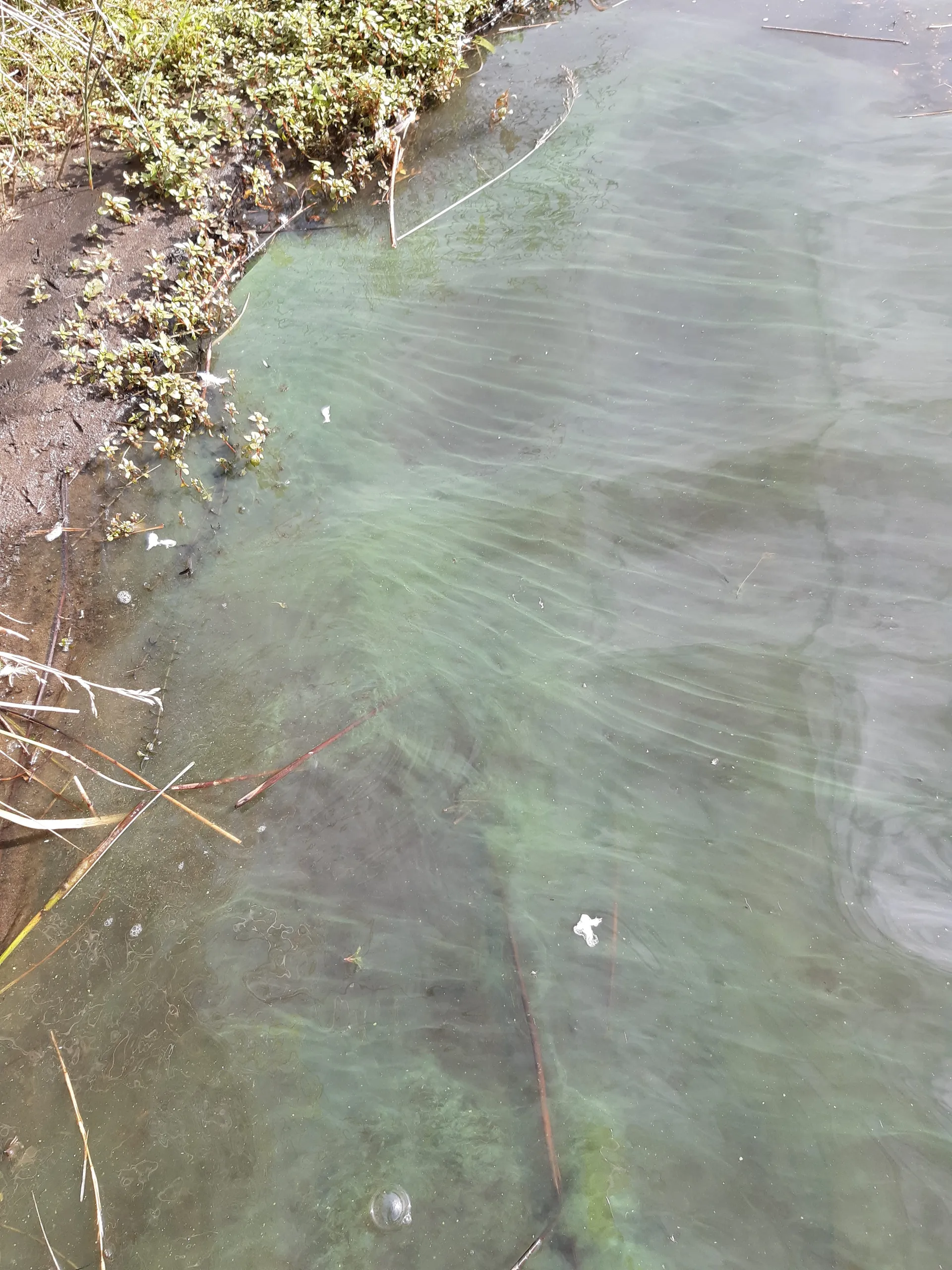
Cyanobacteria are microscopic organisms that are naturally occurring and live in a range of waterways. Some cyanobacteria can produce toxins that are harmful to animals and humans.
In lakes, planktonic cyanobacterial blooms are generally bright green in colour and can give lakes a ‘pea soup’ appearance. They can also form scums on the water’s surface, especially at the water’s edge.
We have new information about a water issue
Cyanobacteria blooms are more common during the summer months, when low rainfall, warm temperatures, the right level of nutrients and more sunlight create an environment where cyanobacteria can thrive.
Some cyanobacteria produce toxins, known as cyanotoxins, which can be a threat to humans and animals when ingested (eaten, licked, or when water containing the toxins is swallowed), inhaled, or absorbed through contact with skin. The toxin levels can only be determined by laboratory testing. Under what conditions toxins are produced is not well understood, and actual toxin levels in the water are highly variable even over short time periods.
Water quality samples are collected for all Safeswim lakes over the summer months (November – April) in areas where people are most likely to be swimming. Planktonic cyanobacteria cell counts and biovolumes are assessed against swimming suitability using the New Zealand Guidelines for Cyanobacteria in Recreational Fresh Waters.
For more information in cyanobacteria, visit the following links:
This is a second FAQ and Description
FAQ 2
It's right here
Not all beaches are the same. Safeswim’s sampling programme has confirmed that water quality behaves differently at beaches depending on:
- The nature of discharges to the beach: contamination at beaches is mainly caused by discharges from land, piped networks and streams direct to a beach. Beaches without these types of discharges generally have better water quality, whereas beaches with stormwater discharges and/or streams will generally have poorer water quality. Adjacent beaches may have different types and numbers of discharges; hence the water quality can differ. In addition, local discharges can vary a great deal depending on the nature of land use in the catchment area of the beach, and the age and state of infrastructure.
- The tide and currents: an incoming tide may push contaminants against the beach while an outgoing tide may flush them out to sea. The specific currents and location of channels at a beach may also affect how water quality changes over time.
Safeswim’s water quality information is calibrated to each individual beach. This means that beaches next to each other may show a different status, reflecting how water quality behaves differently at different beaches due to the above factors.
This should only show on Web, not in the app
Heading 1
Heading 2
Heading 3
Heading 4
Heading 5
Heading 6
Paragraph
- Bullets
- Bullets
Russia has launched 574 drones and 40 missiles on Ukraine in one of the heaviest bombardments in weeks, Ukrainian officials say.
One person was killed in a drone and missile strike on the western city of Lviv, while 15 others were reported wounded in an attack on the south-western Transcarpathia region.
The attacks came as US President Donald Trump spearheads diplomatic moves to halt the war. Ukrainian Foreign Minister Andrii Sybiha said the strikes highlighted why efforts to bring it to an end were "so critical".
President Volodymyr Zelensky has said Ukraine was ready to meet Russia's Vladimir Putin "in neutral Europe" - mooting Switzerland or Austria - adding that he was not against Istanbul either.